June 18, 2026
How to Water a Texas Lawn in Summer Without Wasting It
Water a Texas lawn the right amount in summer heat. Learn the one-inch rule, the cycle-and-soak method, and how to test your sprinkler output.
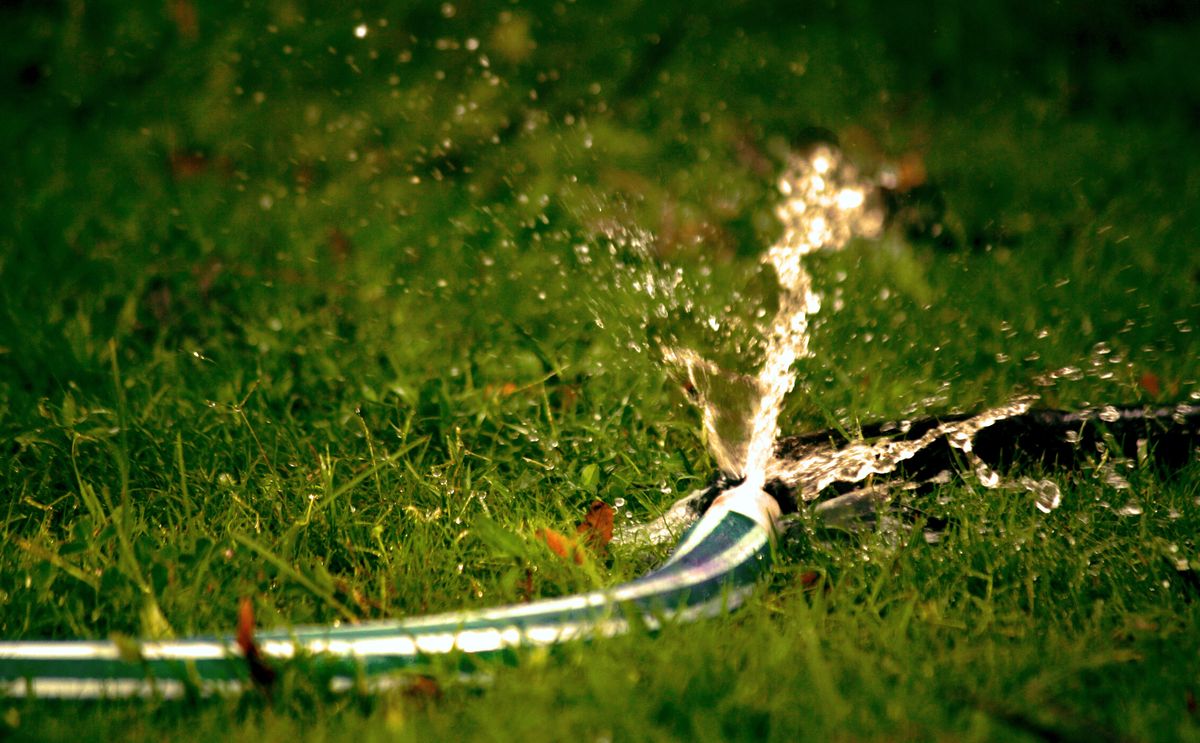
Most Texas lawns get too much water, not too little. Overwatering produces shallow roots, fungus, and a high bill. A lawn with deep roots survives heat with less water. The method below builds deep roots.
These rules apply to the common Texas grasses: bermuda, St. Augustine, zoysia, and buffalo grass.
Apply one inch per week, in one or two sessions
A healthy summer lawn needs about one inch of water per week, including rain. Apply it in one deep session, or split it into two. Do not water a little every day. Daily light watering keeps roots near the surface, and shallow roots fail in August.
Water before 10 a.m. Morning water reaches the roots before the heat evaporates it. Evening water sits on the grass overnight and feeds fungus. Check your city's watering schedule first. Many Texas cities restrict watering days in summer.
Measure your sprinkler output with the can test
You cannot apply one inch if you do not know your output. Run this test once:
- Place 5 or 6 straight-sided cans across the lawn. Tuna cans work.
- Run the sprinklers for 30 minutes.
- Measure the water depth in each can with a ruler.
- Calculate the average depth. Multiply by 2 to get inches per hour.
- Divide 1 inch by that rate. The result is your total run time for the week.
Use cycle-and-soak on clay soil
Clay soil absorbs water slowly. If your water runs down the curb after ten minutes, the soil has stopped absorbing. The extra water is wasted.
Split each session into short cycles. Run each zone for 10 minutes, wait 30 to 60 minutes, and run it again. Repeat until you reach the full run time. The soil absorbs each cycle before the next one starts.
Raise the mower, and watch for stress
Set the mower to its highest setting in summer. Tall grass shades the soil and slows evaporation. Never cut more than one third of the blade height in one mowing.
The lawn tells you when it needs water. Walk across it in the evening. If your footprints stay visible, the grass is dry. If the blades fold closed or turn gray-green, water the next morning.
A brown bermuda lawn in a drought is usually dormant, not dead. It greens up again after rain. Do not panic and double the schedule.
Get supplies from a local expert
Your nearest garden center stocks for your exact zone, and the staff have answered this question a hundred times.
Find a garden center near youMore posts
- How to Plant a Tree in Texas: A Step-by-Step ProcedureJuly 14, 2026
- Grow Tomatoes Through Texas Heat: Variety, Timing, ShadeApril 22, 2026
- Start Seeds Indoors for a Texas Spring GardenJanuary 20, 2026